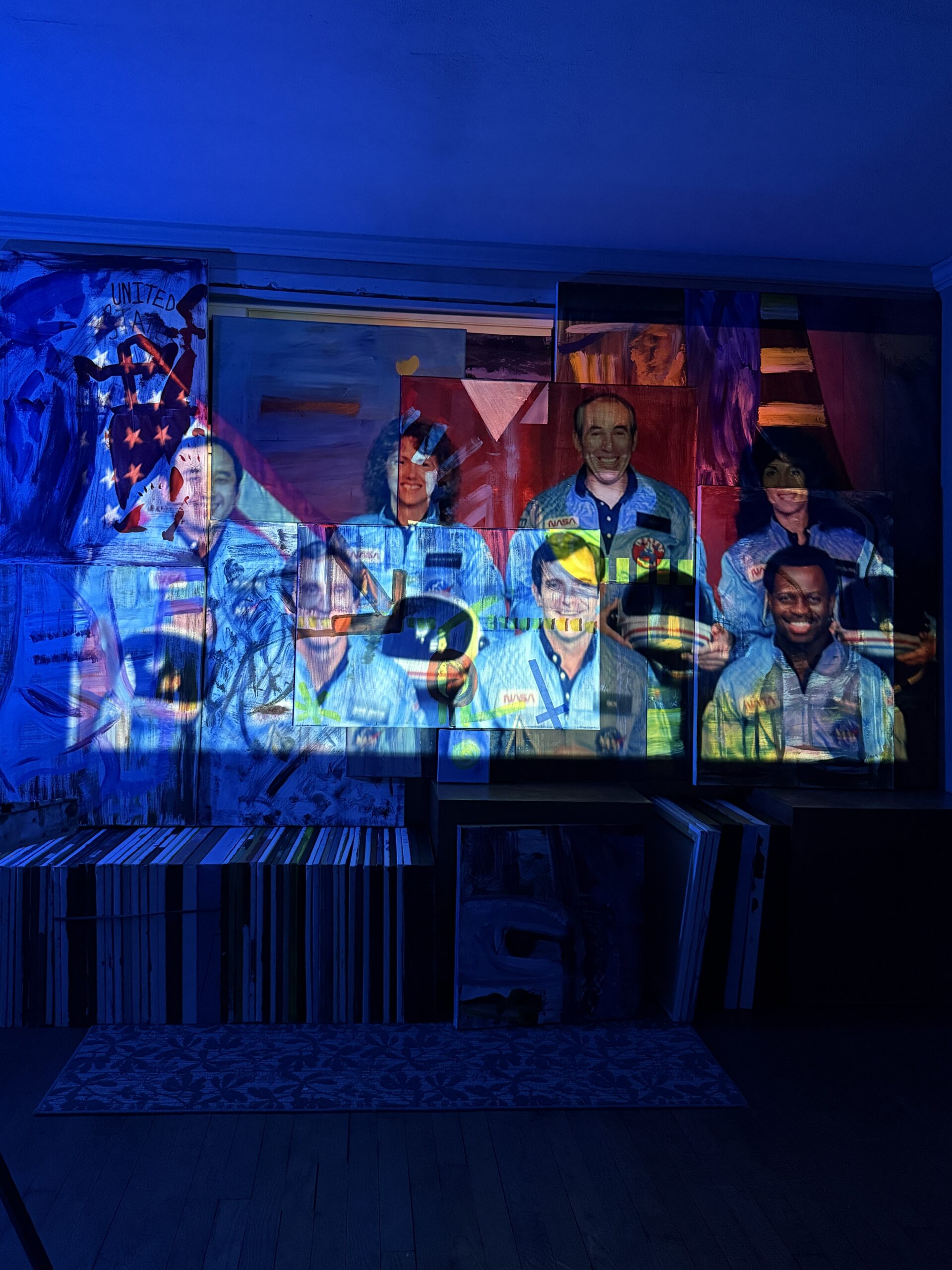
On January 28, 1986, Space Shuttle Challenger broke apart 73 seconds into its flight, killing all seven crew members. The spacecraft disintegrated about 46,000 feet (14 km) above the Atlantic Ocean, off the coast of Cape Canaveral, Florida, at 16:39:13 UTC (11:39:13 a.m. EST, local time at the launch site). It was the first fatal accident involving an American spacecraft while in flight. (Source: Wikipedia)
On January 28, 1986 I was 9 years old.
In the weeks leading up to that date, America had been captured by a good feel story centered around school teacher Christa McCauliffe who had been selected to join a crew with six NASA astronauts for a flight to space.
On the day of the flight my fourth grade teacher Mrs. Overgaard wheeled a television set into our classroom. Something similar to this happened in classrooms across the country. I knew this then because of how many news stories centered McCauliffe’s status as an everyday American school teacher just like Mrs. Overgaard or any of the tens of thousands of other hardworking educators doing their best to nurture and develop young brains. Spirits were high.
I think it’s important for those who came later that I make a point of saying that this was a time before the 24 hour news cycle, before the internet and its clickbait headlines. It predated the shocking, but ultimately desensitizing barrage of tragedy, violence, and cynical indifference to the plight of others that our current information habits consume.
Generational psychic trauma. We were all thinking this was a big moment of celebration and accomplishment and instead we watched seven people die. When it was over—my memory tells me—we didn’t have a debrief, a check in for our feelings. It was back to math, our little brains replaying the raw footage with no computing process for making it go away.
I ask this question without any real understanding of an answer. I’ve got theories and speculations, but I am neither trained professionally or academically in the field, so it’s just speculation. But I wonder what sort of cut and scarring happens in a situation like that where the wound is not treated in the present and nothing is done to the scar.
We’d spent our months leading up to the event sure of the triumphant outcome, even if that hadn’t ever really been guaranteed, only to see the last minute catastrophic failure. What does that tell us about our expectations for the future when we are little and we are still learning how to manage our expectations of the world?
In the last forty years I’ve often thought back to those days, it wasn’t until I started making a point of asking other people what their experience with the Challenger had been. I don’t think I realized just how ubiquitous the experience of television rolled in, television rolled out was, almost uniformly, for kids of that era.
This is not a pipe.
I’m taking the liberty of writing this without looking for actual scholarly work about the event and its aftermath. I don’t want to color my response with studies and the important work of experts. I think it’s possible to approach it from a scientific perspective, but what I’m specifically feeling and wondering feels a bit squishy as far as measuring the effects of what happened. I don’t know if there are language or weights or measurements for pschic trauma and if I get bogged down trying to define my terms and understand methodology, I won’t get to the heart of what it is I’m really trying to say.
What is the metaphor?
For me, the Challenger tragedy created an indelible mark on the minds and expectations of school children because it wrapped the real possibility of tragedy around events that seemed otherwise to be cause for celebration. The specter of death behind every corner seemed a likely enough occurrence that we must remain vigilant.
But does a ten year old process that, consciously, in that moment? Of course not. I tink it’s also worth saying here, I don’t mean to claim this tragedy as only the domain of school children from the day it occurred. It was certainly a wide reaching tragedy that got embedded in a lot of people’s minds.
The distinction I wonder about is that for children of a certain age who hadn’t had their JFK moment, who grew up in the Cold War, who hadn’t developed the internal software to process the event were left with the discovery to process it on their own.
A question I might offer for consideration – what does it do for a person to learn, not just at such an early age (because clearly lots of kids learn terrible life lessons early on), but without processing, that getting excited for big good things the possibility of crushing loss is wrapped up in the possible outcomes? What does it do for our ability and willingness to surrender ourselves to love, to dream for big things, to see any particular task through to completion?
The Challenger exploded forty years ago, this year I turn fifty.
I don’t know that I’ve reconciled my fascination—not with the explosion itself, but its long lasting after effects—in the four decades that have followed, but I’ve learned my awareness and explored its curves to see if it might explain tendencies of my own. At this point, I am not even qualified to be an armchair psychologist, but I’ve certainly spent a lot of time poking and prodding in the dark spaces of my brain in search for answers.
I have created art about the Challenger, I have listened to songs about the event, I have talked to people and I have done my best to escape the linear prison of time and put myself back in that 4th grade classroom to see it through my grown up eyes and to ask myself what special training Mrs. Overgaard may or may not have had in dealing with acute trauma therapy in real time. What has changed, societally, in the forty years that have passed with our understanding of injury in the moment and the lasting effect of a bone that doesn’t grow back straight?
We limp along, our gaze heavenward, wondering what message God sent us and continues to send us in matters of the heavens and the angels who arrive unexpectedly early. Is there a way of undoing? Of complete healing? Am I simply looking for excuses for my own shortcomings and the lack of see through I have in matters of personal aspiration. In professional circles, in personal circles? This is the Go I have been offered, and the God I still side eye. A God who was introduced to me through simplified church drama and not the complex loving being I met on the street in Amsterdam twenty years after the Challenger, twenty years ago.
If this were a fight and if God is the Champion, what then am I but the eternal Challenger?